

Can you believe it’s been six months since we launched the EPS Simulator? Since then we’ve seen institutions who have started integrating it into their teaching programmes and we’re already hearing some really encouraging feedback from educators and students.
How does it work?
One of the biggest challenges in prescribing education is giving students meaningful exposure to decision making before they step into a clinical environment. Reading about prescribing and actually doing it are very different experiences, and the gap between the two has been a challenge for educators.
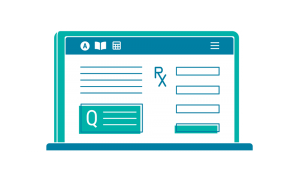
The EPS Simulator was built to replicate the kind of electronic prescribing system students will encounter in hospitals and clinics, it gives them a space to think through complex decisions, make mistakes safely and develop the judgement that comes with practice. With over 4,000 medications available and the ability to build scenarios around detailed patient histories, clinical presentations and allergies, educators have enormous flexibility in how they use it.
What institutions are doing with it
It has been really insightful to see how institutions are shaping the Simulator around their own curricula. When students engage with a realistic prescribing interface regularly, it changes how they approach the subject altogether.
During Pharmacology 2025 in December last year, Professor Kurt Wilson and Hiten Mitha from the University of Manchester presented on how they have been integrating the EPS Simulator into their programme.
The University needed “something that mirrors those clinical processes but doesn’t have all the hindrances that the real clinical systems have.” With 2,500 students spread across different NHS trusts, they also needed one platform that worked for everyone.
They ran a pilot with final year students through two immersive sessions. One was a secondary care session that placed students in the role of a foundation doctor looking after a ward of five patients, working through prioritisation, prescribing decisions and team communication. Facilitators act as nurses, radiologists and other clinical staff, so students can realistically engage as they would in practice. There was also a primary care session that consisted of a two hour GP session, covering acute appointments, duty doctor tasks, prescription reviews and complex polypharmacy cases.
Despite no prior introduction to the Simulator, students got to grips with it quickly. The team noted that the transition was straightforward and the immersive format clearly landed well. In the words of the team: “it’s not just about writing a prescription, it’s about how you administer it, how you communicate this to the other healthcare professionals and the patient.” That broader picture is exactly what the sessions are designed to bring out.
The response from the Manchester University team was really encouraging to hear. They described the sessions as genuinely immersive, with students engaging in a way that felt true to clinical practice rather than just an assessment exercise. The combination of prescribing decisions, prioritisation and real-time communication gave students a much richer experience than working through questions in isolation.
Feedback from educators and students continues to shape how we develop the tool, and there is plenty more to come. If you’d like to see the EPS Simulator in action and explore how it might fit into your prescribing curriculum, we’d love to show you around.
Request a demonstration at www.bpsassessment.com/eps-simulator