The Dacre Review: An Independent Review into the Prescribing Safety Assessment

The Prescribing Safety Assessment (PSA) stands as a pivotal milestone in the journey of medical professionals, serving as a crucial evaluation of their competence in prescribing medications safely and effectively. Since 2017, it has been a mandatory part of the medical education curriculum, ensuring that junior doctors are equipped with the necessary knowledge and skills to make informed and safe prescription decisions. 


Recent developments have placed the PSA under a spotlight, as the findings of the independent Dacre Review have shed new light on its structure, content, and overall impact. In this blog, we delve deeper into the Prescribing Safety Assessment, exploring its significance in medical education, and examine the key takeaways from the Dacre Review. 


Unearthing insights: Why the Dacre Review was commissioned


In 2022, the British Pharmacological Society and the Medical Schools Council jointly commissioned an extensive review of the PSA. The goal was to evaluate the exam’s effectiveness and determine its future direction. The review was overseen by top representatives from across the NHS and medical education programme in the UK, who under the chair of Professor Dame Jane Dacre, have proposed a set of recommendations for the exam. 


Headlines from the Review


The findings from the review can be boiled down to some key themes, we’ve summarised them below; 


Support for the Prescribing Safety Assessment 


The consensus among stakeholders and echoed by the oversight group is that there is widespread support for the PSA. Many understand that prescribing has changed and will continue to change with the introduction of new medications coupled with prescribing in an ageing population, giving rise to complex challenges which junior doctors need to be prepared for. This is where the exam not only presents an opportunity for students to assess their prescribing skills but also build their knowledge and confidence in prescribing before advancing in their careers. 


Impact of the Prescribing Safety Assessment  


The review not only focused on the exam’s effectiveness, but also considered its impact on both students and patients. The data suggests that the PSA is a robust tool for assessing prescribing competency and that since its implementation there has been little difference in the performance between medical schools and regions across the UK, an indication of its reliability.


Aside from the direct impact on students, there is evidence to suggest that the PSA also has had a positive effect on the safety of patients. Since the PSA was made mandatory in 2017, the percentage of medication-related patient safety incidents has reduced year-on-year.  


The Future of the Prescribing Safety Assessment  


The recommendations put forth by the Dacre Review mark a pivotal turning point for the future of the PSA. Among others, it highlights the need for sustained and equitable funding to ensure the PSA’s accessibility and continued improvement. As well as, better regulation and a more robust governance structure to enhance transparency and accountability, bringing together key stakeholders to guide its development and delivery. 


These recommendations collectively represent a promising vision for the PSA’s future, one that prioritises fairness, quality, and sustainability in assessing the prescribing competence of future healthcare professionals. The PSA is poised to evolve into a more effective and reliable assessment tool, forming an integral part of the medical education curriculum within the UK that is better equipped to prepare healthcare practitioners for the challenges of modern medicine.

Advancing Patient Safety and Prescribing Skills: A Webinar Series

In the ever-evolving world of healthcare, patient safety remains a top priority, and the field of prescribing is no exception. At BPS Assessment we are dedicated to promoting safe and effective prescribing practices, and recently, teamed up with iGroup in Malaysia along with the Royal Pharmaceutical Society (RPS) to host a series of enlightening webinars. These webinars were designed to shed light on the importance of prescribing safety and introduce the powerful tools that the BPS Assessment platform provides. In this blog, we will delve into the details of these webinars, showcasing the collaborative effort and valuable insights shared by experts in the field.


Collaboration Across Borders


The collaboration between BPS Assessment and iGroup, a prominent player in the Asian educational and library market, has been a significant step towards promoting prescribing safety and competence in the Asia-Pacific (APAC) region. iGroup is known for its association with Medicines Complete, which is a valuable resource provided by the Royal Pharmaceutical Society. This connection allowed the webinars to present a comprehensive picture of tools and resources available for educators and students.


Wide-Reaching Audience


In order to reach out to a diverse audience, we launched two webinars as part of our joint initiative. The goal was to welcome participants from various locations covered by iGroup including Malaysia, Singapore, Hong Kong, Vietnam, Taiwan, Indonesia, and Thailand. The first webinar held on October 24th was a huge success and we have another one scheduled for November 14th. These webinars are tailored towards the training needs of healthcare professionals and those involved in the teaching and practice of prescribing; including academic pharmacologists, prescribing educators, clinical educators, pharmacy educators, as well as medical and pharmacy students.


24th October Webinar: A Way Forward in Patient Safety


The first webinar, titled “A Way Forward in Patient Safety,” kicked off with a thought-provoking discussion on the importance of patient safety in clinical practice, emphasising the significance of starting with undergraduate education. The event delved into the rates of prescribing errors in the UK and various APAC countries, shedding light on the challenges faced in this crucial aspect of healthcare.


Solutions to address these challenges, particularly in prescribing training and assessment, were discussed, highlighting evidence of engagement and improvement in prescribing safety. The webinar included a walkthrough of the BPS Assessment platform, giving attendees a glimpse of the user journey and learning capabilities. Medicines Complete also had a presence, offering an overview of the tools they provide, such as the British National Formulary (BNF), which complements our prescribing skills assessments.


14th November Webinar: Teaching Tips for Prescribing Educators


The second webinar, titled “Teaching Tips for Prescribing Educators,” is set to delve deeper into the educational aspect of prescribing. It will explore the role and importance of a prescribing curriculum, emphasising the topics and expected competencies in prescribing for medical and pharmacy students.


Educators and presenters will share valuable tips on how to teach prescribing effectively and the different ways of assessing prescribing competency while giving examples of the success in prescribing education such as the UK’s National Pharmacology/Prescribing eLearning platform. As in the first webinar, this event also features a brief platform walkthrough, offering educators a glimpse of the platform’s capabilities and features.


The collaboration between BPS, RPS, and iGroup represents a significant step towards advancing patient safety and prescribing skills in the APAC region. These webinars provide a platform for experts to exchange knowledge, share best practices, and introduce valuable tools for educators and students. It’s clear that the commitment to enhancing patient safety through education and assessment is a shared mission, transcending borders and benefiting all those involved in the field of healthcare. With the knowledge and insights gained from these webinars, we can look forward to a safer and more competent generation of healthcare professionals in the Asia-Pacific region and beyond.


Join us on the 14th of November to find out more about the BPS Assessment prescribing platform!

eLearning and CPD resources from BPS Assessment

In the fast-paced world of healthcare, staying up to date with the latest developments and best practices is crucial for both students and professionals. One area that requires constant improvement is prescribing, as it directly impacts patient outcomes and safety. Our eLearning and CPD resources are here to help students and healthcare professionals enhance their prescribing skills and clinical pharmacology knowledge.


Prescribing eLearning resources

We recognise the importance of equipping students and healthcare professionals with the necessary tools to make informed and safe prescribing decisions. Our eLearning modules are designed to provide comprehensive and interactive learning examples that cover a wide range of topics related to prescribing and clinical pharmacology.


One of the standout features of our eLearning resources is the emphasis on real-life scenarios and case studies. This approach allows learners to apply their theoretical knowledge to practical situations, enhancing their critical thinking and decision-making skills. Whether you’re a medical student learning the ropes or a seasoned healthcare professional aiming to stay current, these resources offer valuable insights that can be directly implemented in your practice.


Continued Professional Development for Clinicians

For those working on their re-accreditation, we also offer a dedicated CPD (Continuing Professional Development) resource. The CPD assessment, which is accredited by the Royal College of Physicians, consists of 30 question items for participants to work through, which evaluates various aspects of the learner’s understanding, including their ability to analyze patient cases, the factors affecting drug interactions and the ability to communicate important information to the patient. On completion of the assessment participants earn 6 CPD points to add to their CPD diaries.


In a world where healthcare is rapidly evolving, it’s essential for students and professionals to stay on top of their game. That’s why we have developed our eLearning and CPD resources, to serve as invaluable tools for enhancing prescribing skills, clinical pharmacology knowledge, and patient safety awareness. Whether you’re a student aspiring to become a competent prescriber or a healthcare professional striving to continuously improve, these resources offer a comprehensive and interactive learning experience that will undoubtedly benefit both you and your patients.

Putting prescribing centre stage: BPS Assessment at the World Congress of Basic and Clinical Pharmacology

The British Pharmacological Society (BPS) recently hosted the 19th World Congress of Basic and Clinical Pharmacology (WCP), the largest event in the pharmacology community. Held every four years, the conference brings together delegates from around the world to share research and engage in sessions about the latest advancements in the field of pharmacology.


Our team joined the hosts at the BPS stand to welcome delegates and showcase the capabilities of our online platform used by customers to enhance prescribing skills and knowledge through eLearning and assessment resources. 


Supporting prescribing in the Middle East 

We had the opportunity to contribute to the scientific programme, by hosting a special symposium for Middle East and GCC delegates, which focused on prescribing training and the challenges to prescribing practices within the region. The speakers included; 


  • His Excellency Professor Aws Alshamsan, Secretary General, Saudi Commission For Health Specialties, Saudi Arabia
  • Professor Sherief Khalifa, Vice Chancellor for Quality & Institutional Effectiveness, Dean of the College of Pharmacy, Gulf Medical University, UAE
  • Professor Moustafa Fahmy, Dean of the Oman College of Health Sciences, Oman
  • Professor Dileep Rohra, Head of Pharmacology, College of Medicine, Alfaisal University, Saudi Arabia.
  • Professor Amal Fatani, Cultural Attaché, Royal Embassy of Saudi Arabia in the United Kingdom
  • Professor Ismael Ibrahim Matalka, President, RAK Medical and Health Sciences University, UAE
  • Professor Simon Maxwell, Director of Clinical Pharmacology and Therapeutics Teaching, University of Edinburgh, and PSA Medical Director


Further discussions focused on the need for better prescribing education for students and trainees through assessment and learning resources and how these improvements could be scaled across institutions in the Middle East.


Advancing prescribing in Australasia 

The team also met with customers from Australia and New Zealand to discuss the progress of the Prescribing Skills Assessment. The meeting provided an opportunity for delegates to come together and discuss strengthening the collaboration between Australasian medical schools and BPS Assessment. Discussions covered setting up local governance structures to support future summative exam delivery and focussed on creating an international partnership that will support the expansion of the Prescribing Skills Assessment in Australasia.


Meeting with existing and future customers 

Across the week, a number of our customers showcased their research findings through scientific posters. Partners from Koc University in Turkey and International Medical University in Malaysia were among the exhibitors, discussing their experiences with the Prescribing Skills Assessment and the positive impact it has had on prescribing knowledge and practices within their institutions.


The event was an excellent opportunity to connect with current and future customers while emphasising the significance of enhancing prescribing knowledge and skills in healthcare, particularly for emerging practitioners. 


We are thrilled that delegates who were able to attend enjoyed their time at the SEC, and we’re already anticipating the next meeting in 2026, which will be hosted by our colleagues at ASCEPT.

Enhance your professional development with a new CPD assessment

We are pleased to announce the launch of a new assessment which has been accredited by the Royal College of Physicians (RCP), UK.


Members enrolled on the assessment and Continued Professional Development (CPD) scheme run by RCP, can now sign up for this new resource via the BPS Assessment Learner Portal. Upon completion, there are 6 CPD points on offer for clinicians to add to their RCP CPD diary.


The assessment, which includes 30 prescribing questions, follows the same blueprint as the Prescribing Safety Assessment and tests key competencies expected of medical professionals such as prescribing writing, prescription review, calculations and data interpretation.

We hope that by providing this assessment we can help to improve the prescribing practices and continued learning of healthcare professionals. Many of our existing eLearning and assessments target undergraduates or foundation doctors so it’s great to be able to roll this out for more experienced clinicians as part of a recognised CPD programme.

Rachel Lambert-Forsyth, CEO of the British Pharmacological Society and Managing Director of BPS Assessment


CPD is an essential aspect of being a medical professional. It’s a way of encouraging the ongoing learning and development of knowledge, skills, and attitudes which are necessary for maintaining competence and delivering safe and effective patient care.


BPS Assessment is pleased to now offer CPD training. Take a look at the RCP accredited assessment here, and get your 6 CPD points now!


Platform Licensing: creating prescribing education that matches your learning outcomes

Prescribing education is an important aspect of modern medical training, but it often means educators need to tailor their lessons to meet the specific requirement of both their students and their organisation’s curricula. We know through talking with our customers that creating engaging content that is both informative and effective can be a time-consuming task.


In this blog, we explore how the BPS Assessment’s online platform can aid in developing prescribing education, and improving prescribing competency among trainees while reducing the time burden on educators.


The challenges of developing prescribing education

Building resources that simulate or replicate prescribing in the real world are very few and far between, not only this, but educators often feel as though they have to go to huge lengths to create robust and engaging resources to help trainees better understand prescribing.

With limited time dedicated to this important area of medical education, students often finish their training with a lack of confidence in their prescribing abilities.


Creating unique prescribing resources with our online platform

Our online platform delivers prescribing eLearning and assessments to students who sign up for an account either independently or through their organisation.


We provide prescription writing questions, which test the students’ therapeutic intention, rather than trying to mimic a specific electronic prescribing system. By doing so, we can create a prescribing learning environment which is suitable for training all prescribers, regardless of the EPS that they go on to use.


Through years of research and development, we’ve established an authoring console which is built into the online platform, giving educators the opportunity to write, edit and administer prescribing resources.


Assessment templates on offer

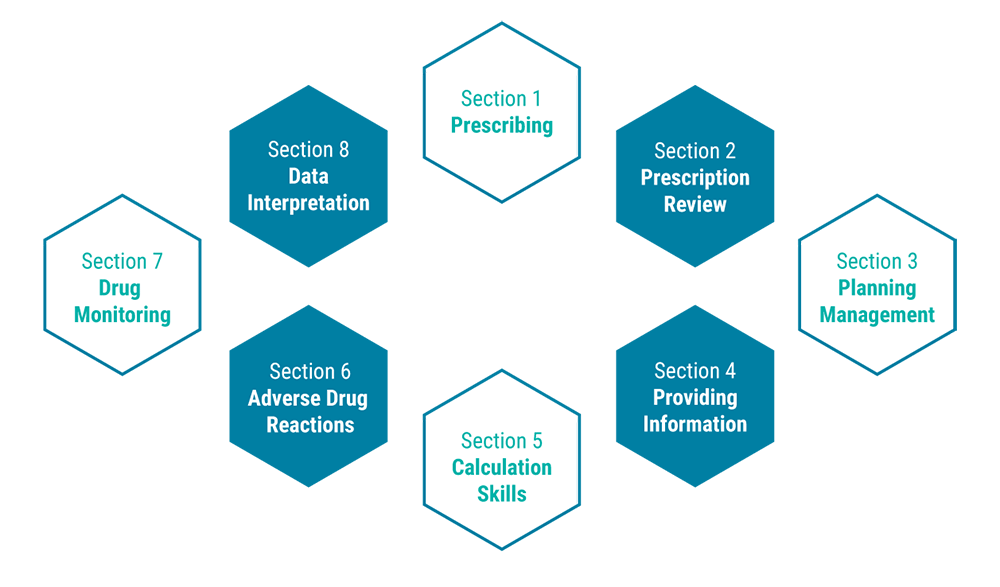
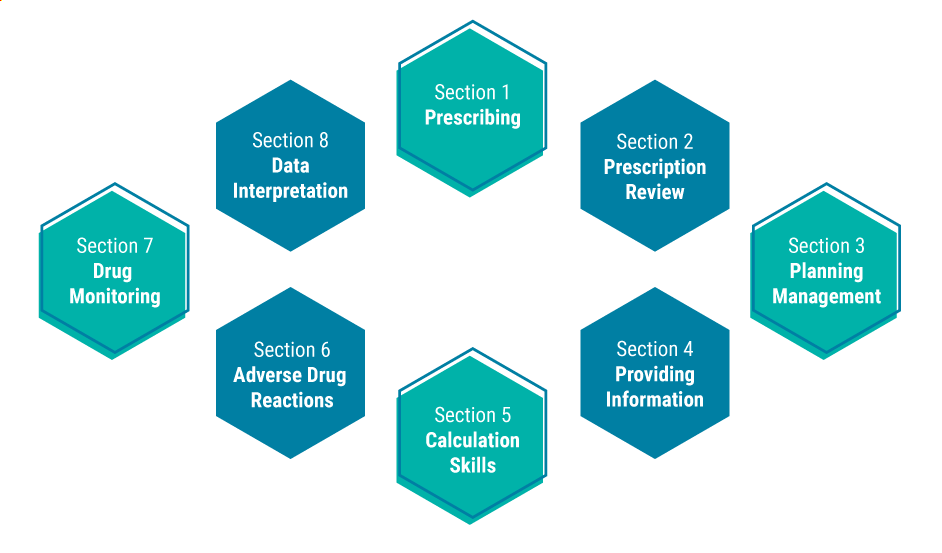
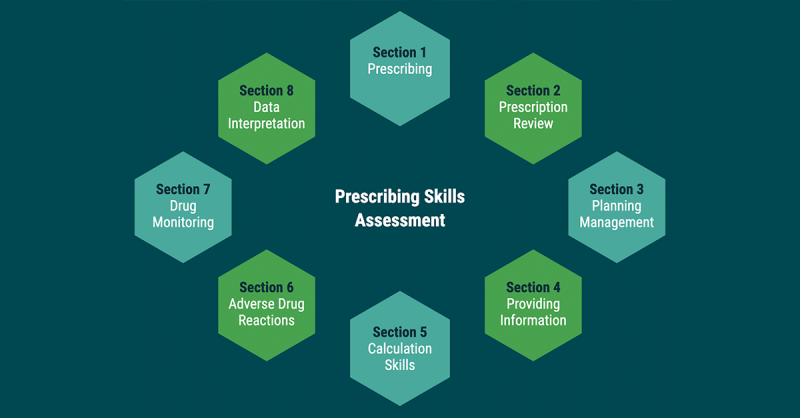
Our out-of-the-box assessments follow a blueprint which tests 8 fundamental competencies in prescribing. The competencies can be seen in the image below.

Educators can choose to follow the blueprint and use the templates available to create their own assessments, or they also have the option to create their own templates depending on their requirements.


Take advantage of expert consultation

In order to create our database of questions, BPS Assessment works with a team of prescribing experts. As part of a platform licensing, educators have the option to consult with our team to ensure their prescribing resources are testing the right areas for their students while reflecting an accurate representation of what prescribing looks like in the real world.


You can request a demo of the platform to see how platform licensing might work for you and your organisation. Contact team@bspassessment.com

New monthly feature in Prescriber magazine

We are pleased to announce a new monthly feature in Prescriber magazine that will allow readers to test their prescribing knowledge across a range of medication safety topics. Every month we will feature one question item from the Prescribing Skills Assessment question bank, brought to you by BPS Assessment, with answers and formative feedback provided.


You can try this month’s question item for yourself here.

prescribing skills assessment

The Prescribing Skills Assessment question items span 8 core areas of prescribing skills, from prescription review to drug monitoring. These questions cover a range of clinical settings, including General Practice, Paediatrics, Opioids and AMR and mirror the question styles used in the UK Prescribing Safety Assessment (PSA).

This new monthly feature in Prescriber magazine will help bring these questions to an even wider audience, allowing readers to check their knowledge of common prescribing topics and get rich feedback.


Take a look at the new feature in this month’s issue of Prescriber or find out more about the full Prescribing Skills Assessment from BPS Assessment here and get in touch if you have any questions.

Celebrating Pharmacists

On Friday, pharmacists all over the world were celebrated through World Pharmacists Day. We really enjoyed reading about all the ways our colleagues in pharmacy are helping transform global health care. Pharmacists and pharmacologists have different roles, but by working together they can make a positive impact by ensuring the safe and effective development and delivery of life-changing medicines.

“This year sees our 10th World Pharmacists Day. We aim to show how pharmacists contribute to a world where everyone benefits from access to safe, effective, quality and affordable medicines and health technologies, as well as from pharmaceutical care services.”

FIP President Dominique Jordan

Pharmacists and pharmacologists also work together to develop learning and assessment products for the prescribers and pharmacists of the future. Take a look at Lynne Bollington’s recent video, for example, to see how pharmacist knowledge is central to the development of the UK PSA, for example, which uses the same platform as our own international Prescribing Skills Assessment.

How We Support Pharmacists

As the learning and assessment branch of the British Pharmacological Society, we support pharmacists by developing high quality learning and assessment resources that drive improvement in medication safety.

The Prescribing Skills Assessment is particularly valuable for pharmacists. It’s a flexible online learning and assessment tool that allows pharmacists to develop and test their skills across 8 core areas of prescribing, from prescription review to calculation skills to ADRs. It includes over 1000 questions, all written by practising experts, that put the pharmacist into specific and realistic clinical scenarios. There is a specially developed pharmacists’ version of the Prescribing Skills Assessment that includes a tailored 30-item paper for pharmacists as well as two tailored 30-item practice papers.

Schools and organisations all over the world are now taking advantage of the Prescribing Skills Assessment for pharmacists, such as Health Education and Improvement Wales, who run the Prescribing Skills Assessment for their pre-registration pharmacist trainees, and GMU PharmD students who recently completed their Prescribing Skills Assessment.

We have also developed new BPS Assessment Simulators, affordable packages of content that offer targeted skills development for pharmacists in critical areas of prescribing such as Hypertension, AMR and Deprescribing.

Get in touch to find out more about the resources we have developed for pharmacists, including the tailored version of the Prescribing Skills Assessment. You can also read some of the pharmacist stories and experiences shared on Twitter via #WorldPharmacistsDay.


Australasian students to sit BPS Assessment prescribing skills pilot

A major prescribing skills assessment pilot is underway in 11 medical schools in Australia and New Zealand, delivered in partnership with BPS Assessment.

The project aims to measure the effectiveness and suitability of an assessment based on the UK Prescribing Safety Assessment (PSA) for final-year medical students. It builds on a 2017 pilot scheme which assessed over 1,500 students from nine medical schools. With the University of Otago and the University of Queensland joining the 2018 cohort, student numbers are expected to be even higher this year.

Exams started in May and will continue until early December, with students sitting a two-hour, 60-question paper. The assessment has been reviewed and localised by a group of Australasian experts from each participating school.

ASCEPT (the Australasian Society of Clinical and Experimental Pharmacologists and Toxicologists) and its members have been very supportive in promoting the assessments. The Australian Medicines Handbook team has provided the technical support required to enable the use of their online formulary by candidates. The New Zealand Formulary has provided support for the participating New Zealand medical schools.

Associate Professor Claire Harrison from Monash University, who is leading the Australian iteration said:

“This assessment represents a significant collaboration between Australasian institutions and BPS Assessment. Medication errors are a global challenge and educating new doctors in prescribing skills is one of the key ways to tackle it. Like BPS Assessment, I believe that assessment drives learning so I am delighted to be involved again this year and look forward to seeing the results.”


Notes

BPS Assessment Ltd is the assessment and elearning business of the British Pharmacological Society. Its mission is to drive improvement in medication safety worldwide through knowledge assessment and learning.

2018 Australasian pilot participating medical schools:

Deakin University

Monash University

University of Auckland

University of Newcastle

University of New South Wales

University of Otago

University of Queensland

University of Sydney

University of Tasmania

University of Western Australia

Western Sydney University